Seminaire Dr Ben HUMPHREYS ILL 21/07/2026
Advancing our Understanding of Responsive Polymer Brushes


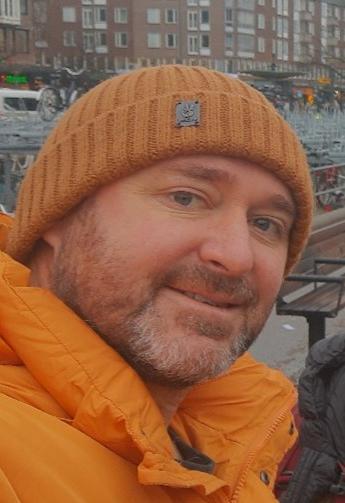
Advancing our Understanding of Responsive Polymer Brushes

Institut Laue-Langevin (ILL) Grenoble, France
Instrument responsible D17 neutron reflectometer
Abstract
Interfacial properties of a surface can be extensively modified through the addition of a polymer brush layer; a dense array of end-tethered polymers grafted to a surface. When a polymer brush is synthesised with a stimulus responsive polymer, the surface properties can be tailored to respond, often reversibly, to external stimuli such as temperature, light, pH, solvent or electric fields. While these so-called smart materials are particularly promising for high-value applications such as sensors, nanoactuation and microfluidics, their response can be significantly influenced by additives such as osmolytes and salts. Unlike untethered polymer systems, research into the influence of additives for responsive polymer brushes has been sparse, yet this knowledge is crucial when advancing their utilisation in biomedical and industrial applications.
Throughout my research career I have primarily focused on the influence of salts and osmolytes on temperature and pH responsive homo- and co-polymer brushes. I will firstly discuss my synthetic methodologies and choice of responsive polymers. This will be followed by a comprehensive outline of the approaches used to investigate these responsive coatings. Here, starting with the simplest systems, then gradually increasing complexity, I have been able to systematically understand the influence of individual additives/changes. This information is invaluable when considering the complex real-world applications that can benefit from the utilisation of smart, responsive polymer brush surface coatings.
Short Bio/CV
In 2015 I graduated from the University of Newcastle, Australia, with a Bachelor of Science, 1st class honors, majoring in Chemistry, followed by my PhD at the same university (2015-2019) titled “Nanostructure of Temperature Responsive Polymer Brushes Modulated by Salt Identity”. I then accepted a post-doc position at Lund University in Sweden, investigating the internal structural changes of a triglyceride film throughout enzymatic digestion, with particular focus on the influence of pH and how this influences the species present throughout the lipolytic process. In 2023 I started in my current position as instrument responsible for the D17 neutron reflectometer at the ILL where I have re-established my research on responsive polymer brushes with a focus on osmolyte and salt additives in aqueous solutions.